What a leak-shaped bill looks like
Bills rise for ordinary reasons: summer watering, guests, a new pool fill, a longer billing period. A hidden leak looks different. Usage climbs and stays high, month after month, without matching any change in how the household lives.
The pattern is usually steady rather than spiky. A leak under a slab runs around the clock, so the extra volume shows up every day, including days when nobody is home.
Compare the same month year on year, not consecutive months. Seasonal swings are large in Nevada, and comparing July with May will mislead. If this July is well above last July, and nothing else explains it, keep reading.
Ruling out the usual suspects
Most high bills turn out to be one of a short list of causes that are cheap to find. Work through them first.
- A toilet that keeps refilling. Add a few drops of food coloring to the tank, wait fifteen minutes, and see if color reaches the bowl.
- A dripping tap or hose bib, which are easy to hear and see.
- Irrigation: a stuck valve, a broken head or a controller set to run more often than you realise.
- A pool that is topping itself up.
- A water softener or filter that is cycling continuously, if you have one.
If none of those explain it, the meter will say whether the leak is somewhere else.
Using the meter
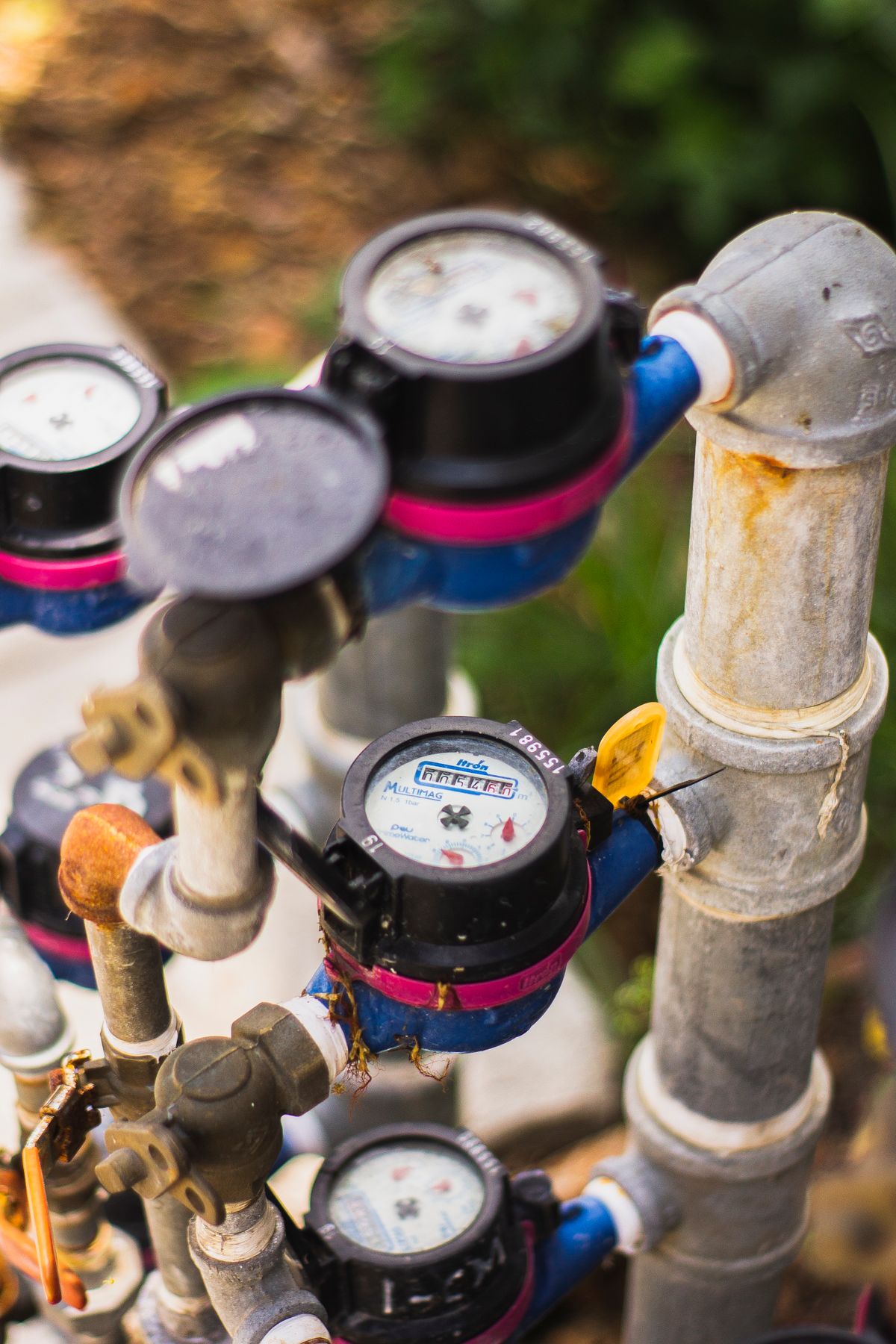
The meter reads the water that passes into the house, so it sees every leak after it. With every tap, appliance and ice maker off, the small triangle or dial on the meter should be still. Watch it for a couple of minutes.
If it moves, close the main shutoff and look again. If it stops, the leak is on the house side. Then turn off the irrigation controller and the valve to the pool and repeat. If it still moves, the leak is inside the lines to the house, which in a slab home means the lines under the floor are the prime suspect.
Take a note of the reading at night and again in the morning. A steady rise overnight with nobody home is the strongest signal you can gather yourself. The water meter check gives the whole routine.
Why slab homes hide leaks
A leak in a wall shows up as damp or stained drywall. A leak in the attic stains a ceiling. A leak in a slab goes into the ground, where the water can run through gravel, along utility trenches and into soil for weeks without surfacing.
That is why the first sign is so often financial. Long before there is a warm spot or a sound, the extra water is already running through the meter.
Small leaks are also more common than large ones. A pinhole in a copper line may lose a few gallons an hour, which adds up quietly over a billing cycle without any visible effect.
Why this comes up in Nevada homes
The Las Vegas Valley has thousands of homes from the 1980s, 1990s and 2000s with plumbing under the slab. Many have copper, and very hard water is a common feature across the south. Over decades, those factors can wear thin spots in the line from the inside. A first pinhole is often a small leak that goes unnoticed for months. Hard water and copper leaks covers this.
Heat is a factor too. Hot lines cycle every day, and in summer the slab itself is warm, which can mask a warm patch. The bill is often the more reliable signal.
Landscaping and pools are common in the Valley, which means the yard is a frequent source of confusion. Ruling it out is half the work. Pool, drip system or slab goes through it.
Once you call
The technician starts with the meter check and isolation of the hot and cold lines, and then uses acoustic and thermal tools to place the leak. If the leak turns out to be in the yard, the crew will say so. That is not a slab leak, and they will tell you that plainly.
If the leak is under the slab, you will see a mark on the floor and hear the options. Slab leak detection describes the visit.
How long can you wait?
A slow leak will not usually turn into an emergency overnight, but it will continue to cost you money. Waiting until the next bill gives you one more data point at the cost of another cycle of water.
If you suspect a leak, a meter test and a call is a reasonable next step. If the leak is under the slab and slow, isolation or a scheduled visit may be an option while you decide. What to do when you find a slab leak lays out the order of steps.
Reading the bill itself
Most bills show usage for the current period alongside previous periods. Look at three things: the usage figure for this period, the same period last year, and the number of days covered. A longer billing period inflates usage without any change in daily habits.
Divide the usage by the days in the period to get a daily figure. Compare it with the daily figure from the same season last year. If daily usage has risen, and the household has not changed, you have a stronger case for a leak than the raw monthly figure suggests.
If the bill shows a meter reading, you can check it against your own reading at the meter. A mismatch is worth raising with the provider, but that is a billing matter and not a plumbing one.
If your bill shows usage in tiers or by category, the share going to the highest tier may change quickly with a leak, because continuous extra use pushes volume into the higher bands.
This site cannot tell you how your bill is calculated or what adjustments may be available. The provider can explain its own bill. What the technician can tell you is whether water is leaving the line.
Keeping a simple usage log
Two or three days of readings make a stronger case than one. Pick a time when the house is quiet, such as just before bed and just after waking. Record the meter reading both times.
On the first night, leave everything as normal in the house but avoid running appliances overnight. On the second night, turn off the irrigation controller and close the valve to any pool fill. On the third, close the main shutoff and compare.
Differences between the nights tell a story. If overnight usage drops with irrigation off, the yard was part of the problem. If it stays the same with irrigation off but stops with the main closed, the leak is in the house-side line. If it never stops, it is between the meter and the main.
Keep the notes in one place and photograph the meter each time. If you call a crew, the log lets the person who answers match you with the right visit.
A log also protects against a false alarm. If the numbers show no overnight movement, the bill may be explained by habits, season or an appliance, and a slab leak visit is not needed yet.
Using older bills
If you keep old bills, pull the last twelve months. A simple list of month and usage shows the pattern, and a jump is easy to see.
Where this comes up in Nevada
A bill that climbs for no reason is the sign most people notice first, in any part of the state. Local pages that cover the homes and conditions around this topic include Spring Valley, Carson City, Winnemucca and Lovelock.
Those pages give local context for a rising bill. More towns are on the areas page.
Common questions
How much extra water does a slab leak use?
+
It varies widely. A pinhole may lose a modest amount continuously, which still shows on the bill. The meter is the better guide than any estimate.
Will the water provider fix this?
+
The provider supplies to the meter. A leak after the meter is on the property side. Call a leak crew to locate it.
Can I ask the provider for a leak adjustment?
+
Policies differ and are the provider’s to explain. This site does not give billing advice.
Could my water softener be the cause?
+
Anything that uses water can show on the meter. The meter test with everything off sorts it out.
What if the meter is still but the bill is high?
+
Check whether the reading period, irrigation schedule or household use changed. A still meter with everything off suggests no leak at that moment.
Could it be a leak in the yard?
+
Yes, which is why the irrigation-off meter check matters. A yard leak is not a slab leak.
How do I check overnight?
+
Note the meter reading before bed with everything off, then again in the morning. Any change means water used or lost.
Should I shut off the main while I wait for a visit?
+
If you are away or want certainty, yes. Otherwise it is optional for a slow leak.
Related reading: the sound of running water and slab leak repair.